
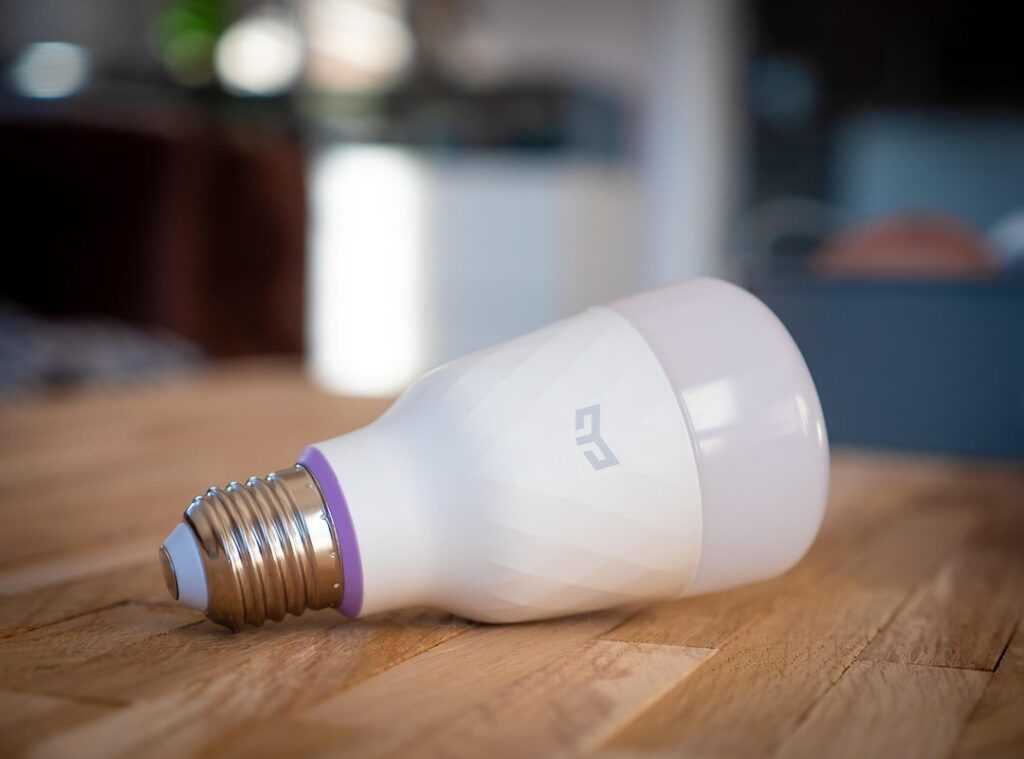
Home automation’s supposed to make life easier, but it doesn’t always work out that way. The sheer number of devices and brands, Philips Hue, Amazon Alexa, Google Home, Apple HomeKit, creates a maze that leaves most people feeling lost. You’re not alone in that. Setting up a single light bulb shouldn’t require a tech degree. Yet here we are, drowning in options, each one vowing seamless integration while quietly demanding its own app, its own account, its own learning curve. The gap between what home automation claims and what it actually delivers? Massive. Most people give up before the second room.
The term “smart home” gets thrown around constantly. Most people? They’ve got no clue how the stuff actually works. So here’s a clear, no-nonsense guide to home automation systems that’ll cut through the noise and show you what’s really going on under the hood.
I’ve cut through the marketing noise on these protocols and algorithms. You’ll walk away understanding how to evaluate them properly, which means actually making smart decisions instead of just guessing. Sound fair?
Home automation unplugged: beyond gadgets
Let’s face it. Most people think of home automation as just smart speakers and lightbulbs. But they’re missing the big picture.
A real home automation system isn’t just a collection of gadgets scattered around your place. It’s an integrated network. Hardware, communication protocols, software, they all need to talk to each other, feeding data back and forth in real time. Think of it like your nervous system: everything connects to a central brain that coordinates the whole operation (usually a hub, sometimes your phone). Without that integration, you’ve got toys. With it, you’ve got a system that actually works.
Now, here’s a kicker. Remote control isn’t real automation. Turning your lights on with your phone?
That’s just a fancy remote control. Real automation? Your house adjusts lighting, temperature, and security based on patterns, not because you told it to, but because it learned what you want. It figures out you always dim the lights at 9 PM. Knows you crank the heat when it hits 65 outside. It’s like having a butler who actually pays attention.
Big difference, right?
There’s also the architecture, the backbone, if you will. Centralized systems rely on a dedicated hub. One boss in charge. That’s the model.
Decentralized systems, though, let devices communicate directly or via the cloud. It’s more like a democracy of devices. Both have pros and cons.
Centralized systems offer reliability and speed, you know exactly who to blame when things break. Decentralized systems, though? They’re flexible. Often more secure, too.
So which one do you trust?
For those looking to dive deeper, understanding these core differences is key. Ready to take a step beyond mere gadgets? Dive into the nitty-gritty of integrating smart home devices seamlessly.
A solid home automation guide ties these pieces together instead of leaving you drowning in disconnected devices. You’re not just dropping cash on the newest gadgets, you’re building a system that actually works, one that responds to your actual needs rather than some imagined ideal setup. That’s the difference.
The core components: hubs, protocols, and device integration
Ever thought about what keeps your smart home running? The central hub does the heavy lifting. It’s basically traffic control for all your devices, managing communication between them, executing the automation rules you’ve set up, and handling remote access whenever you want it from outside your home. Without it, nothing talks to anything else.
This hub keeps everything connected and coordinated. Without it, your smart home would be chaos (like) a city without traffic lights.
Let’s talk about protocols. They’re like languages devices use to communicate.
First up, wi-Fi. You know it. I know it.
It’s everywhere. High bandwidth makes it fantastic for data-heavy tasks, though it drains power and can clog your network. Not every device in your home needs it.
Then there’s Zigbee and Z-Wave. These are low-power mesh networks, perfect for sensors and switches. But what is a mesh network?
Think of it as a group chat for devices. Each one links to another, forming a network that’s more reliable than any single unit could be on its own. One device goes down? The rest keep talking. That’s the whole point.
Bluetooth and BLE (Bluetooth Low Energy) are next. They’re excellent for short-range, point-to-point tasks. Got a smart lock or speaker?
Bluetooth has you covered, offering a direct link without the power drain of Wi-Fi.
Now, the new kid on the block: Matter. It’s being called the ‘universal translator’ for smart devices. Matter’s role is key.
It aims to solve interoperability issues, letting devices from different brands finally play nice together. It’s like speaking every language at once.
For those diving into smart homes, check out this home automation systems guide. It’s a solid start for understanding this tech jungle.
Knowing your hub and protocols matters. They keep your smart home devices running smoothly, actually working together instead of sitting around like expensive paperweights. That’s the whole point, right? Get the foundation right, and everything else falls into place.
Do you have what you need to keep your home connected?
The intelligence layer: AI in the modern smart home
Think of the “intelligence layer” as your home’s brain. It’s like having a personal assistant that makes decisions without you asking. You know those basic “if-this-then-that” setups?

They’re old news. Imagine coming home to a living room that’s already the perfect temperature because your smart system knew you’d walk through the door at 6 PM. That’s what these systems do now, they learn your patterns. Motion-activated lights at 10 PM? Sure, that works. But modern setups? They’re thinking ahead.
Now that’s smart.
AI algorithms do the heavy lifting, gathering data from sensors around your home. Motion, temperature, light, you name it. This isn’t just data.
It’s insight. With this, AI creates predictive and adaptive automations. It’s like your home is learning to become more you over time.
You want optimized energy consumption? Done. Proactive security alerts to catch unusual activity patterns?
No problem. Personalized “scenes” that adjust as your lifestyle changes? Absolutely.
There’s something genuinely satisfying about a home that actually keeps up with you. Bold. Entirely new. Privacy matters too, though, that’s the part people worry about most.
Local on-device AI processing keeps your data safe, cutting down those annoying wait times because speed matters. It’s all about balance, right?
But there’s more to consider. Your smart home isn’t just about comfort. It’s about security too.
You want to keep your network safe from unwanted guests. Check out this Smart Device Security Protecting Network guide for more on securing your devices.
This is the future of home automation systems. Not just smarter devices, spaces that actually know what you need before you ask. They’re adapting to your rhythm, your routines, your real life, not some idealized version of it. And it’s happening now.
That’s the real magic. Are you ready to let your home think for itself? Embrace these changes.
Your home should be as changing as you are.
Choosing your system: practical tips
When it comes to a home automation systems guide, the key isn’t just knowing what’s out there. It’s about how you choose.
Start with interoperability. Does the system play nice with others? Matter support is non-negotiable for me.
Ask yourself: how locked-in is this space? You don’t want to end up in tech jail with no escape route.
Then there’s scalability. Can the system grow with you, or is it stuck in the past? We’re talking about expanding from lights to security to energy management, and most platforms either handle that seamlessly or they crumble under the load. The difference between a smart home that evolves with your needs and one that becomes obsolete in three years often comes down to whether the backbone can support new integrations without choking. Not all of them can.
If it can’t handle growth, it’s not worth the investment.
Reliability and control are next. Does the system shut down the moment your Wi-Fi wobbles? You need local control for those core functions.
Trust me, you don’t want to be left in the dark when the internet goes down.
Data privacy and security can’t be ignored. What’s the company doing with your data? How are updates handled?
Be nosy about their policies. It’s your data, after all.
Before picking a system, ask yourself what actually matters. A real guide helps you decide, not just dump products on you. Whatever you land on should hit every mark that counts for your situation.
That’s how you pick a system that truly works for you.
Make your home smarter today
You’ve seen the chaos of fragmented markets. It’s a mess. But now, thanks to this home automation systems guide, you have clarity.
You understand why focusing on protocols, AI, and interoperability shields you from fleeting marketing gimmicks. What’s next? Audit your primary goal.
Is it security? Convenience? Energy efficiency?
Pick one. Dive into how a specific system tackles interoperability. That’s your action plan.
You need a smarter home that serves you, not the other way around. So start now. Be proactive.
Transform your living space into the intelligent haven you deserve. It’s time. Get moving.

 Zelphia Elthros has opinions about smart device integration tactics. Informed ones, backed by real experience — but opinions nonetheless, and they doesn't try to disguise them as neutral observation. They thinks a lot of what gets written about Smart Device Integration Tactics, Tech Optimization Hacks, Gos AI Algorithm Applications is either too cautious to be useful or too confident to be credible, and they's work tends to sit deliberately in the space between those two failure modes.
Reading Zelphia's pieces, you get the sense of someone who has thought about this stuff seriously and arrived at actual conclusions — not just collected a range of perspectives and declined to pick one. That can be uncomfortable when they lands on something you disagree with. It's also why the writing is worth engaging with. Zelphia isn't interested in telling people what they want to hear. They is interested in telling them what they actually thinks, with enough reasoning behind it that you can push back if you want to. That kind of intellectual honesty is rarer than it should be.
What Zelphia is best at is the moment when a familiar topic reveals something unexpected — when the conventional wisdom turns out to be slightly off, or when a small shift in framing changes everything. They finds those moments consistently, which is why they's work tends to generate real discussion rather than just passive agreement.
Zelphia Elthros has opinions about smart device integration tactics. Informed ones, backed by real experience — but opinions nonetheless, and they doesn't try to disguise them as neutral observation. They thinks a lot of what gets written about Smart Device Integration Tactics, Tech Optimization Hacks, Gos AI Algorithm Applications is either too cautious to be useful or too confident to be credible, and they's work tends to sit deliberately in the space between those two failure modes.
Reading Zelphia's pieces, you get the sense of someone who has thought about this stuff seriously and arrived at actual conclusions — not just collected a range of perspectives and declined to pick one. That can be uncomfortable when they lands on something you disagree with. It's also why the writing is worth engaging with. Zelphia isn't interested in telling people what they want to hear. They is interested in telling them what they actually thinks, with enough reasoning behind it that you can push back if you want to. That kind of intellectual honesty is rarer than it should be.
What Zelphia is best at is the moment when a familiar topic reveals something unexpected — when the conventional wisdom turns out to be slightly off, or when a small shift in framing changes everything. They finds those moments consistently, which is why they's work tends to generate real discussion rather than just passive agreement.