
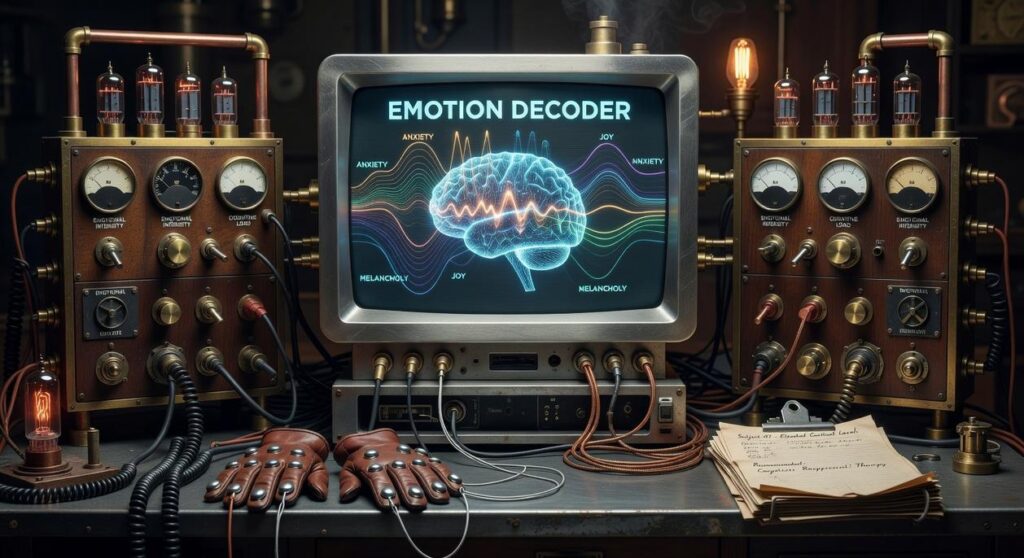
You’ve heard the buzz. AI’s getting better at sounding human. But watch what happens when a machine misreads sarcasm or takes a joke literally, suddenly the whole thing falls apart, and you see the gap. We’re nowhere close yet.
The truth is, natural language understanding is the holy grail of modern AI. And cracking it is harder than it looks.
This article cuts through the hype. It shows what’s actually happening inside today’s most advanced AI systems, the ones that translate more than words and catch emotion, pick up on what’s left unsaid, decode what someone really means. Not theory, these are the real models running right now, trying to close the gap between human subtlety and machine logic.
We built this analysis on what actually works in practice, cutting through the hype. Want to understand how machines are starting to catch what we’re really saying, even the stuff we don’t spell out explicitly? That’s the real shift. It’s happening now, and the implications are deeper than most people realize.
Let’s decode the digital Rosetta Stone, together.
Beyond keywords: the leap to semantic understanding
As GOS AI dives deep into the intricacies of Natural Language Understanding by effectively interpreting context, it draws on key principles that resonate with the top strategies outlined in our article on the Best Code Advice from Buzzardcoding – for more details, check out our Best Code Advice Buzzardcoding.
Let me take you back to my early days experimenting with chatbots.
I was testing a simple search assistant, and I typed, “Can you find places to eat that aren’t fast food?” What I got back? A list of every burger joint and fried chicken spot in the area. Not helpful. Turns out, the poor bot was using the bag-of-words model—an early natural language processing (NLP) method where words are stripped of context and treated like isolated tokens. It saw “food” and ignored the nuance of “not fast.”
That’s when I started digging into semantic models and things got a whole lot smarter. Word2Vec and GloVe changed the game, they ditched the idea of isolated keywords and instead mapped words into a multidimensional mathematical space where relationships actually mattered. The now-iconic example? King – Man + Woman = Queen. It shattered the old methods. Suddenly, AI wasn’t just reading. It was connecting meaning across dimensions in ways the old keyword-based systems never could.
This was the tipping point that led to natural language understanding. Instead of reacting to keywords, systems began interpreting meaning based on context and relationships. (Think of how even your phone keyboard guesses what you’re typing before you finish—spooky, but spot on.)
Pro Tip: Always test AI tools with context-heavy prompts. It’ll reveal quickly whether they understand or are just guessing.
The transformer architecture: how AI finally grasped context
You’ve probably heard “transformer” get tossed around like sci-fi magic, and honestly, that’s not far off. The transformer model is the architecture driving nearly all modern language systems, GPT-3, GPT-4, basically everything now. It’s what makes chatbots actually feel like conversations instead of keyword parrots spitting back answers. That’s the real difference.
So, what made transformers so revolutionary?
Before transformers, models struggled with long sentences and context, they’d forget what came before or completely misinterpret phrases with multiple meanings. Self-attention changed that. It’s a deceptively simple idea, really, but it’s what powers transformer models at their core.
Imagine the sentence “I need to go to the bank.” Now compare that to “The boat slid near the bank of the river.” Same word, completely different meanings. Self-attention lets the AI look at every word in a sentence and figure out how important each one is relative to all the others, constantly reweighting on the fly. That’s the trick. Without it, you can’t track context in a real conversation, and the whole thing falls apart before you’ve finished a thought.
Pro tip: This is why AI translations have improved dramatically. Tools like DeepL and Google Translate now nail subtle meanings and idioms, offering “break a leg” as Bonne chance instead of a disturbing command.
The result? Natural language understanding becomes possible. The AI doesn’t just read—it interprets. That powers those automatic summaries, smooth voice assistants, and yes, even smart predictive systems like those used in how ai algorithms are powering predictive analytics models.
Transformers didn’t just change AI—they taught it context.
Ai as an emotional and intentional decoder
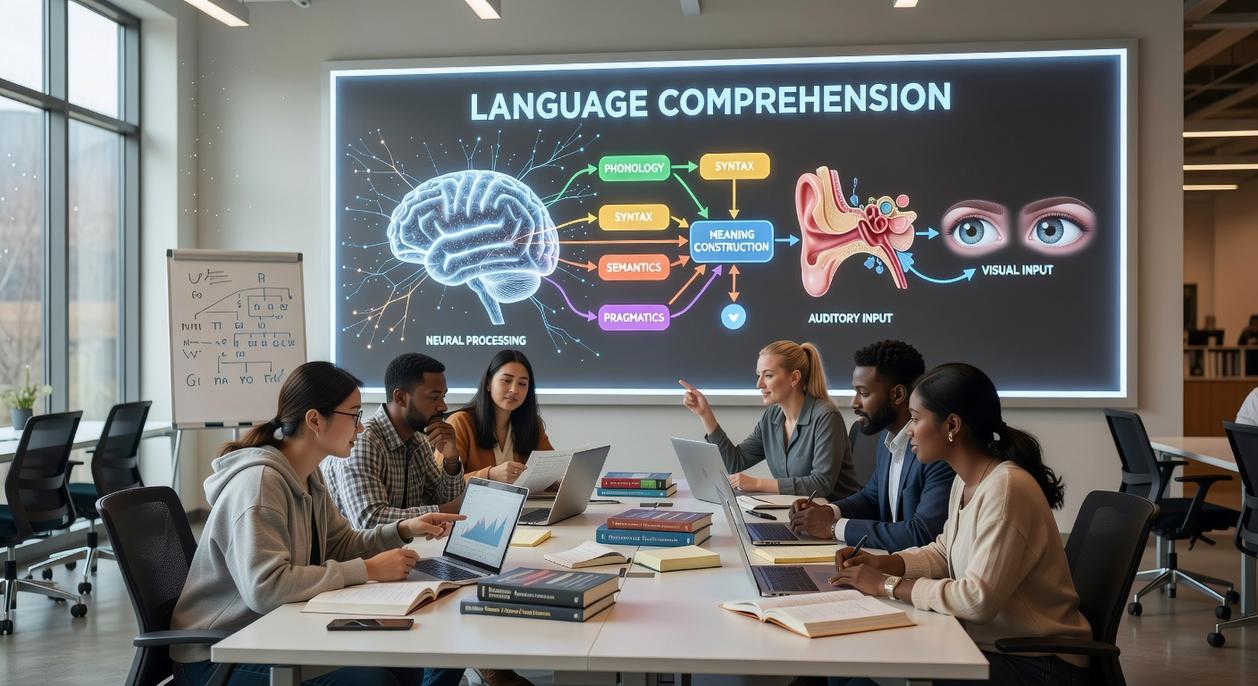
Let’s be honest, standard sentiment analysis has always felt like a robotic mood ring. Green for good, red for bad. No real understanding of *why* people say what they say. Modern AI? It’s different. It doesn’t just scan for positive or negative words anymore. Instead, it catches the nuance, reads between the lines, picks up on emotional and contextual signals that older systems would’ve missed entirely.
Consider this gem of a customer review: “Great, another feature that nobody asked for.” On the surface, the word “Great” might trigger a positive flag. But anyone who’s ever said those words while rolling their eyes knows it’s clearly sarcasm. Today’s advanced sentiment algorithms tackle this head-on. They use tone, lexical contrast, and contextual structures to detect sarcasm and disappointment buried under polite or passive-aggressive phrasing. It’s basically subtweet detection for product reviews.
Now let’s go a level deeper. Newer systems don’t just ask how someone feels, but why they said what they did in the first place. That’s where intent recognition shines. Ask your voice assistant “Play rock music,” and AI identifies an entertainment-focused intent. But try “How do you bake a rock cake?” and the intent shifts to information-seeking. Same keyword—entirely different objective.
Here’s a gap few competitors fill: the blending of sentiment analysis with real-time intent tracking to predict next actions. Understanding that a user is frustrated? That’s table stakes. Knowing whether they’re about to churn, complain, or upgrade, that’s different entirely.
Pro tip: Watch for AI systems that adapt in-session. They’re the future of smart feedback loops—and where your UX strategy most needs attention.
The next frontier: current challenges and future innovations
We’ve made real progress with AI, sure, but the wins aren’t the whole story. The breakthroughs matter less than you’d think. Some of the best lessons? They came from spectacular failures, from times we got it completely wrong.
We rolled out a chatbot trained on “global English” once. Irish Twitter humor completely baffled it. Brazilian slang? Forget about it. AI’s great at grammar, cultural nuance is something else entirely. Humor, especially the dry, sarcastic kind, still trips these models up hard. No amount of training data fixes what the model’s never actually *heard* in context. The bot couldn’t catch that a Nigerian joke relies on specific economic memory, or that a Dublin quip assumes you know the pub scene. Your training data needs to reflect regional differences, not just translate them. Regional jokes need regional air to breathe. Check that diversity before you ship anything.
Ambiguity’s where AI falls apart. We thought natural language understanding would handle the tricky stuff. Wrong. Take “He saw the man with the telescope”, who actually had it? Without common-sense reasoning, the model just guessed. Badly. It couldn’t ground outputs in real-world logic, and that’s the core problem. You can’t reason your way out of what you don’t understand about the world.
We got it wrong treating text as the sole ingredient. Multimodal AI changes that. It pulls images, sounds, and language together, letting systems actually understand the full picture instead of one narrow slice. The result isn’t a minor upgrade, comprehension doesn’t just widen, it explodes. You’re no longer feeding a system words and hoping it figures out what a sunset looks like or what a voice conveys. It doesn’t have to guess anymore.
We built this guide because the way machines understand people used to be broken.
Misheard commands. Misread emotions. Pointless guesses about what you really meant.
Those days are ending.
AI’s moved way past simple keyword matching now. It grasps nuance, context, tone, the real stuff that used to trip machines up. The foundation underneath all this? Natural language understanding. That’s what gives machines the ability to actually read between our words, to pick up on what we don’t say out loud. It’s a genuine shift in how these systems work, and it changes what they can do.
We set out to explain how that leap happened. You’ve seen it, from transformers to sentiment analysis to pragmatic applications shaping daily tech.
The struggle of not being understood? It’s fading.
Here’s what you should do next:
Think about what better language understanding could do for your systems right now. Refining chatbots? Analyzing real-time feedback? Deeper AI comprehension lets your technology actually meet users where they are, not where you hope they’ll be.
And with precision like this, it’s no wonder top developers trust our tools to optimize AI-human interactions.
Unlock a smarter connection—start applying advanced natural language understanding now.

 Della Lovellerds writes the kind of smart device integration tactics content that people actually send to each other. Not because it's flashy or controversial, but because it's the sort of thing where you read it and immediately think of three people who need to see it. Della has a talent for identifying the questions that a lot of people have but haven't quite figured out how to articulate yet — and then answering them properly.
They covers a lot of ground: Smart Device Integration Tactics, Innovation Alerts, Tech Optimization Hacks, and plenty of adjacent territory that doesn't always get treated with the same seriousness. The consistency across all of it is a certain kind of respect for the reader. Della doesn't assume people are stupid, and they doesn't assume they know everything either. They writes for someone who is genuinely trying to figure something out — because that's usually who's actually reading. That assumption shapes everything from how they structures an explanation to how much background they includes before getting to the point.
Beyond the practical stuff, there's something in Della's writing that reflects a real investment in the subject — not performed enthusiasm, but the kind of sustained interest that produces insight over time. They has been paying attention to smart device integration tactics long enough that they notices things a more casual observer would miss. That depth shows up in the work in ways that are hard to fake.
Della Lovellerds writes the kind of smart device integration tactics content that people actually send to each other. Not because it's flashy or controversial, but because it's the sort of thing where you read it and immediately think of three people who need to see it. Della has a talent for identifying the questions that a lot of people have but haven't quite figured out how to articulate yet — and then answering them properly.
They covers a lot of ground: Smart Device Integration Tactics, Innovation Alerts, Tech Optimization Hacks, and plenty of adjacent territory that doesn't always get treated with the same seriousness. The consistency across all of it is a certain kind of respect for the reader. Della doesn't assume people are stupid, and they doesn't assume they know everything either. They writes for someone who is genuinely trying to figure something out — because that's usually who's actually reading. That assumption shapes everything from how they structures an explanation to how much background they includes before getting to the point.
Beyond the practical stuff, there's something in Della's writing that reflects a real investment in the subject — not performed enthusiasm, but the kind of sustained interest that produces insight over time. They has been paying attention to smart device integration tactics long enough that they notices things a more casual observer would miss. That depth shows up in the work in ways that are hard to fake.