

You use ai image recognition every day—when your phone unlocks with your face, when social media auto-tags a friend, or when your car spots road signs before you do.
But what’s actually happening behind the scenes? For most people, it’s still a mystery. The tech works like magic—but it’s not magic. It’s code, data, and some of the most advanced algorithms in artificial intelligence.
This article breaks down the technology that powers ai image recognition in simple terms. You’ll learn what makes machines “see,” how they interpret what they’re seeing, and why this matters for everything from personal devices to industrial automation.
We’ve analyzed core algorithm structures, performance optimizations, and real-world applications so you don’t have to. No hype—just a clear roadmap to understanding how ai image recognition works and why it’s reshaping entire industries.
If you came looking for answers, you’re in the right place.
What is Automated Image Recognition? The Core Concepts
Let’s be honest—“automated image recognition” might sound like something straight out of a sci-fi movie, but the core ideas are surprisingly intuitive.
At its heart, this technology teaches artificial intelligence (AI) to spot and label things in images and videos—whether that’s a dog, a face, a crowded stadium, or even just a stop sign. It’s the same logic your brain uses when it looks at a blurry childhood photo and says, “Yep, that’s me in third grade.”
Some folks argue that image recognition is just overhyped labeling tech. But I disagree. It’s more like giving machines a visual cortex—one that’s surprisingly good when trained right.
The process? Four key steps:
| Step | What Happens |
|---|---|
| 1. Data Acquisition | Collecting thousands (or millions) of labeled images |
| 2. Pre-processing | Cleaning images—resizing, color normalizing, removing noise |
| 3. Feature Extraction | The AI zeroes in on patterns: edges, corners, textures |
| 4. Classification/Detection | It finally says, “This is a cat,” or finds the cat in a busy scene |
Think of it like how kids learn what a tiger looks like. Ears, stripes, sharp teeth—after a few textbook moments (and maybe a zoo visit), the visual cues stick.
Sure, ai image recognition isn’t flawless. Sometimes it calls a blueberry muffin a Chihuahua (yes, really). But this tech powers everything from Face ID on your phone to diagnosing diseases in X-rays.
Pro tip: Garbage in, garbage out. The model’s accuracy is tied to the quality and diversity of the images you feed it.
And if you’re wondering how this ties into personalized tech, check out ai in personalization how algorithms adapt to individual users—you’ll see how visual data shapes decisions behind the scenes.
The Engine Room: Key Algorithms and AI Models
Let me take you back to a moment in a crowded airport.
I was trying to board using one of those shiny new facial recognition gates. As I stepped forward, the gate lit up green instantly (a small miracle given my expression after a red-eye flight). That seamless scan? Powered by ai image recognition, a tech marvel largely built on something called Convolutional Neural Networks—or CNNs.
Why CNNs Matter
CNNs are inspired by the human visual cortex (yes, our brain’s own image processor), making them the gold standard in image analysis.
They’ve taught machines how to “see”—an impressive feat, considering most of us struggle to find our sunglasses on our own heads.
Dissecting a CNN (Don’t worry, it’s painless)
Here’s a simplified look at how these networks work:
- Convolutional Layer: Think of it like digital sunglasses. It scans the image with special filters to detect features—edges, colors, textures.
- Pooling Layer: Like summarizing a photo album into a postcard. It condenses the image, keeping what matters most while ditching repetitive details.
- Fully Connected Layer: Now it gets decisive. This layer uses the learned features to identify what the image contains—”cat,” “face,” “stop sign,” you name it.
Beyond the Basics
Other models shine in specific tasks:
- R-CNNs: These detect not just what’s there, but where. They draw bounding boxes around people, objects—great for things like self-driving cars or security cams.
- GANs (Generative Adversarial Networks): These actually create images. They’re used to generate synthetic data and train other models more effectively—basically the deepfake artist’s toolkit (use responsibly, people).
Pro Tip: If your AI model is underperforming, try supplementing training data with high-quality GAN-generated samples. It’s like cross-training for algorithms.
That airport gate I mentioned? Powered by layers—literally.
Real-World Applications: Beyond Your Smartphone Camera
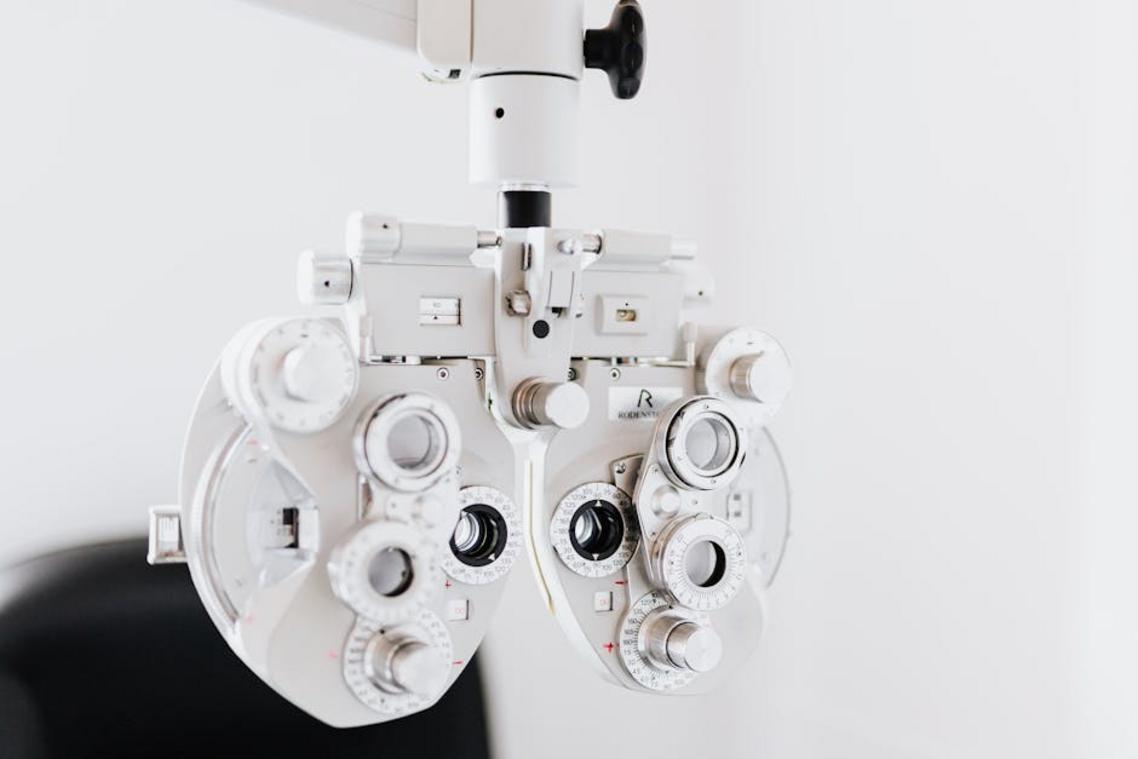
When most people hear about ai image recognition, their minds leap straight to smartphone cameras—portrait mode, facial filters, and maybe a little object recognition magic. But that’s just scratching the silicon surface.
Here’s the truth: the technology’s greatest impact is happening where you don’t even see it. And the benefits? They’re game-changing—for industries, workers, and everyday users alike.
Let’s break it down:
| Industry | What AI Image Recognition Does | Why It Matters |
|---|---|---|
| Healthcare | Analyzes X-rays, MRIs, and CT scans to detect tumors, fractures, or anomalies |
Faster, more accurate diagnoses with lower risk of human error (literally life-saving tech) |
| Automotive | Powers autonomous vehicles to “see” pedestrians, lane lines, and other cars in real time | Safer self-driving functionality and fewer accidents |
| Retail & E-commerce | Enables visual search, auto-checkout, and in-store behavior tracking | Easier shopping, shorter lines, and better product recommendations (get ready to actually find that jacket) |
| Manufacturing | Monitors products on assembly lines for defects with superhuman precision | Less waste, higher product quality, and quicker recalls if needed |
| Security & Surveillance | Detects unauthorized access, suspicious movements, and even missing persons in real-time | More proactive protection in public and private spaces |
Pro Tip: If you’re building smart devices or IoT-enabled systems, plugging into ai image recognition can dramatically increase automation without needing massive new infrastructure.
Pop culture fans might recall “Jarvis” from Iron Man—always vigilant, always analyzing. We haven’t built Jarvis (yet), but these applications? We’re closer than you think.
What’s in it for you? As a developer, tech leader, or strategic investor, understanding where this technology is already thriving helps you identify high-ROI opportunities and get ahead in a rapidly shifting tech landscape.
In short: It’s not just cool tech. It’s practical power.
The Future is Visual: Optimization and Emerging Trends
We used to joke that the future was flying cars. Turns out, it’s smarter drones and doorbells with better eyesight than most humans before coffee.
Edge AI integration is leading the charge—running models directly on devices (yep, your phone just got smarter again). This on-device wizardry means LOWER LATENCY (read: faster reactions), better privacy, and less shouting at the cloud to catch up.
Enter Multimodal AI. Imagine if your phone not only saw your dog but also heard the bark and understood the caption you mumbled. This fusion of ai image recognition, NLP, and audio is shaping tech that’s LESS robot, more Sherlock Holmes.
And don’t sleep on Data Synthesis. Generative AI is now cooking up endless training sets—diverse, rich, and not just fifty pictures of the same cat. (Sorry, Whiskers.)
Pro tip: Bad data = bad predictions. Synthetics might just save your model—and your weekend launch.
You came here to understand how machines are learning to see.
Now you know the fundamentals behind ai image recognition—the same tech that’s already transforming industries from healthcare to manufacturing.
It’s not science fiction. It’s practical. And it works because of deep-learning models like CNNs that can identify faces, read traffic signs, flag defects, and more—faster and more accurately than any human eye.
You’re no longer in the dark about how this technology works or why it matters.
So what’s next? Look for ways ai image recognition can solve the visual processing problems in your business. From automating inspections to enhancing customer experiences, there’s a real ROI on applying this technology smartly.
See What’s Next
If you’re struggling with inefficiency, inconsistency, or blind spots in your data streams, ai image recognition is your answer.
Leaders across sectors are already using it to boost productivity and precision—so why not you?
Start optimizing with tools built on proven algorithms. Tap into the same insights fueling innovation across top industries.
Don’t wait—explore how to apply this tech in your field today.

 Zelphia Elthros has opinions about smart device integration tactics. Informed ones, backed by real experience — but opinions nonetheless, and they doesn't try to disguise them as neutral observation. They thinks a lot of what gets written about Smart Device Integration Tactics, Tech Optimization Hacks, Gos AI Algorithm Applications is either too cautious to be useful or too confident to be credible, and they's work tends to sit deliberately in the space between those two failure modes.
Reading Zelphia's pieces, you get the sense of someone who has thought about this stuff seriously and arrived at actual conclusions — not just collected a range of perspectives and declined to pick one. That can be uncomfortable when they lands on something you disagree with. It's also why the writing is worth engaging with. Zelphia isn't interested in telling people what they want to hear. They is interested in telling them what they actually thinks, with enough reasoning behind it that you can push back if you want to. That kind of intellectual honesty is rarer than it should be.
What Zelphia is best at is the moment when a familiar topic reveals something unexpected — when the conventional wisdom turns out to be slightly off, or when a small shift in framing changes everything. They finds those moments consistently, which is why they's work tends to generate real discussion rather than just passive agreement.
Zelphia Elthros has opinions about smart device integration tactics. Informed ones, backed by real experience — but opinions nonetheless, and they doesn't try to disguise them as neutral observation. They thinks a lot of what gets written about Smart Device Integration Tactics, Tech Optimization Hacks, Gos AI Algorithm Applications is either too cautious to be useful or too confident to be credible, and they's work tends to sit deliberately in the space between those two failure modes.
Reading Zelphia's pieces, you get the sense of someone who has thought about this stuff seriously and arrived at actual conclusions — not just collected a range of perspectives and declined to pick one. That can be uncomfortable when they lands on something you disagree with. It's also why the writing is worth engaging with. Zelphia isn't interested in telling people what they want to hear. They is interested in telling them what they actually thinks, with enough reasoning behind it that you can push back if you want to. That kind of intellectual honesty is rarer than it should be.
What Zelphia is best at is the moment when a familiar topic reveals something unexpected — when the conventional wisdom turns out to be slightly off, or when a small shift in framing changes everything. They finds those moments consistently, which is why they's work tends to generate real discussion rather than just passive agreement.